Phone : +918287568640
Small Vision Problems, Big Impact
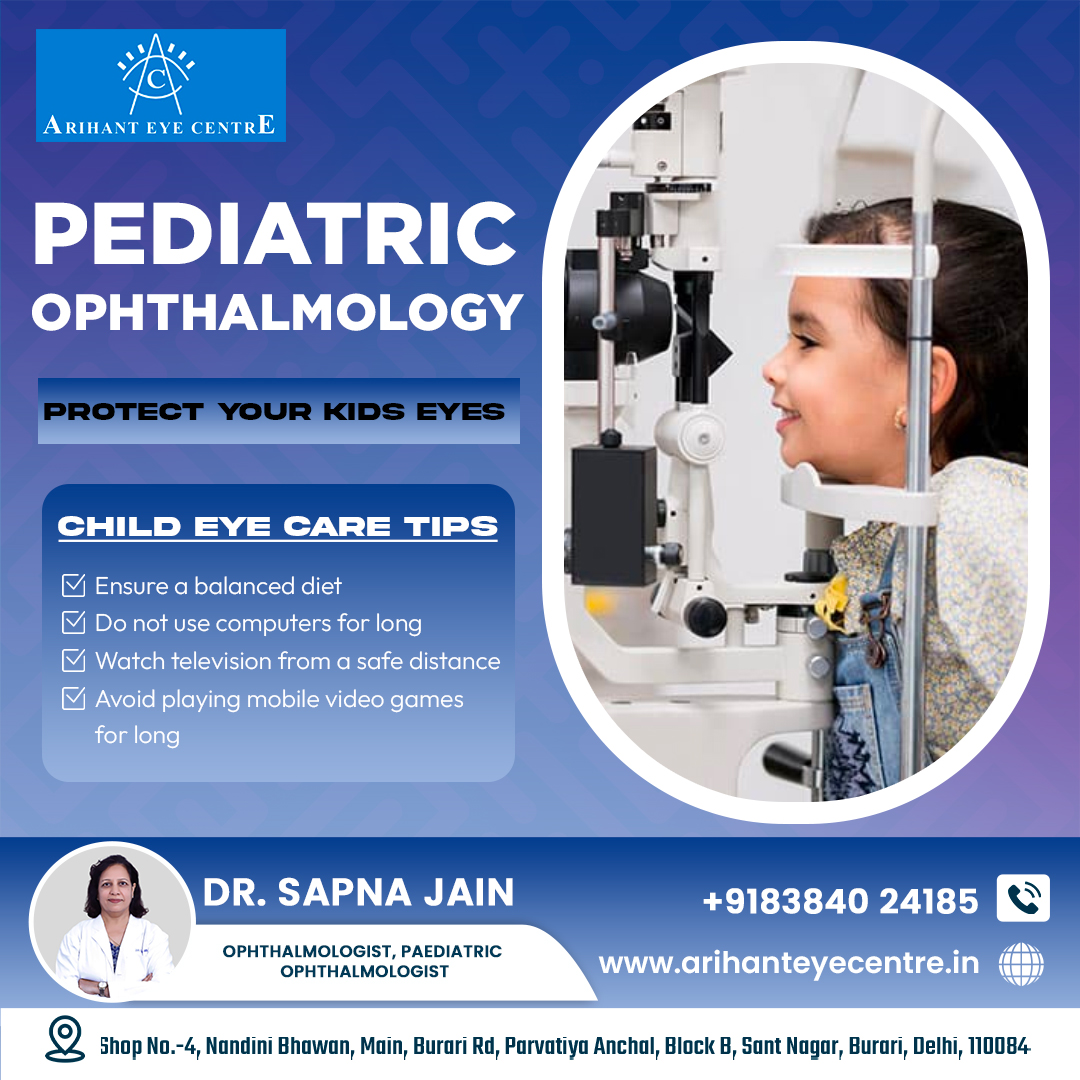
Your child keeps sitting close to the television. At school, the teacher says they are struggling to read the board. At home, you notice frequent eye rubbing or squinting.
You may think they are tired, distracted, or simply spending too much time on screens.
But children do not always know when their vision is not normal. That is why parents should pay attention to small changes and consider an eye examination when something seems different.
For families searching for a Pediatric Ophthalmologist in Model Town, the goal is not only to improve eyesight. It is to make sure your child's vision develops properly.
What Does a Pediatric Ophthalmologist Do?
A pediatric ophthalmologist focuses on eye problems affecting babies, children and teenagers.
Children's eyes are still developing, so their eye problems may need a different approach from adult eye care.
Main specialties to look for
-
Children's eye examinations
-
Vision and spectacle testing
-
Squint and eye alignment
-
Lazy eye or amblyopia
-
Crossed or wandering eyes
-
Eye infections and allergies
-
Childhood cataract
-
Blocked tear ducts
-
Eye injuries
-
Problems with focusing
-
Eye coordination and binocular vision
-
Screen-related eye complaints
-
Monitoring of childhood eye conditions
You do not need to figure out which condition your child has. A specialist can assess the symptoms and guide you.
When Should Your Child See One?
Your child sits too close
If your child regularly sits very close to the television, holds books close to the face or brings a phone unusually near the eyes, it is worth asking why.
It may simply be a habit, but it can also indicate difficulty seeing clearly.
Squinting becomes frequent
Children may squint to make objects appear clearer.
If you notice this happening often, especially while looking at distant objects, arrange an eye examination rather than assuming the child needs to concentrate harder.
School performance suddenly changes
Vision and learning are closely connected.
A child who cannot see the classroom board clearly may appear inattentive or uninterested when the real problem is difficulty seeing.
Teachers sometimes notice this before parents do.
Don't Wait for Your Child to Complain
Here is the advice we would challenge: “If my child can see, there is no need for an eye check.”
Children often cannot explain that one eye sees differently from the other.
They may simply adapt.
A child with reduced vision in one eye may continue normal daily activities because the stronger eye compensates. That does not mean the weaker eye should be ignored.
A 2024 Eye-Health Stat Worth Knowing
WHO reported in 2024 that at least 2.2 billion people globally have a vision impairment, with many cases being preventable or still needing to be addressed.
For parents, the practical message is simple: vision problems are common, and early identification can make a meaningful difference.
What Signs Should Parents Watch?
Children may show eye problems through behaviour rather than words.
Look for these clues
-
Frequent squinting
-
Sitting very close to screens
-
Holding books close
-
Covering one eye
-
Tilting the head
-
Frequent eye rubbing
-
Difficulty reading
-
Losing their place while reading
-
Avoiding drawing or other close work
-
Complaining of headaches
-
Difficulty seeing the board
-
One eye appearing to turn inward or outward
One sign does not automatically mean your child has an eye disease.
But repeated or unusual signs deserve attention.
What About Squint?
Squint means the eyes are not properly aligned and may point in different directions.
Some parents wait because they believe the child will eventually grow out of it.
That is not an assumption we recommend making.
An eye specialist can determine the cause and decide whether the child needs glasses, monitoring, exercises in selected cases, patching or another form of treatment.
Earlier assessment can be valuable
The developing visual system responds differently during childhood than adulthood.
That is why persistent eye misalignment should be evaluated rather than ignored.
What Happens During a Children's Eye Examination?
A child's appointment is usually designed around the child's age and ability to cooperate.
The specialist may check vision, eye alignment, focusing ability, eye movements and the health of the eyes. In some cases, eye drops may be used to obtain a more accurate assessment.
Parents should not assume that an examination means their child will automatically need glasses.
Sometimes the result is simply reassurance and monitoring.
A Real-World Parent Scenario
We have seen parents bring a child after a teacher repeatedly mentioned that the child was having difficulty seeing the classroom board.
At home, the child seemed perfectly fine, so the parents initially assumed it was a concentration issue. A detailed eye assessment helped identify that the child needed proper vision correction rather than more pressure to “pay attention.”
The lesson for parents is important: a child who seems distracted may sometimes be struggling to see.
How Screens Fit Into the Picture
Screens are now part of children's schoolwork, entertainment and communication.
The answer is not necessarily to ban every screen.
Instead, parents should encourage sensible screen habits, regular breaks, appropriate viewing distance and plenty of outdoor activity. If your child has persistent eye strain, headaches or blurred vision, an eye examination can help determine whether something more than screen fatigue is involved.
Why Choose the Right Specialist?
Children need more than a standard vision number.
A good pediatric eye evaluation considers the child's age, development, school needs, eye alignment and overall visual behaviour.
When visiting a Pediatric Ophthalmologist in Model Town, parents should feel comfortable asking:
-
Is my child's vision developing normally?
-
Does my child need glasses?
-
Is the eye alignment normal?
-
Could this affect school performance?
-
Does the child need follow-up?
-
What symptoms should make us return sooner?
Clear explanations make parents more confident about the next step.
What Is Special About Arihant Eye Centre?
Arihant Eye Centre provides patient-focused eye care for children with concerns such as changing vision, squint, difficulty seeing the board, frequent eye rubbing, childhood eye conditions and other vision-related complaints. The approach is to understand the child's needs carefully and guide parents toward appropriate examination, treatment or monitoring.
Don't Wait Until Schoolwork Suffers
Your child does not have to complain about poor eyesight before you take action.
If you notice repeated squinting, unusual head tilting, sitting very close to screens, difficulty reading or one eye appearing misaligned, arrange an eye examination.
And if your child has a sudden eye injury, sudden vision change, severe eye pain or significant swelling, seek prompt medical attention.
Frequently Asked Questions
1. When should a child see a pediatric ophthalmologist?
A child should be evaluated if there are signs such as squinting, blurred vision, difficulty seeing the board, frequent headaches, eye misalignment, covering one eye or unusual difficulty with reading.
2. How do I know if my child needs glasses?
Only a proper eye examination can determine this. Signs such as sitting very close, squinting or difficulty seeing distant objects may suggest a vision problem, but they do not confirm the need for glasses.
3. Can children outgrow a squint?
Some childhood eye alignment problems may change over time, but parents should not assume a persistent squint will disappear on its own. An eye specialist can determine whether observation or treatment is appropriate.
Take the Next Step
If something about your child's vision does not look right, trust the observation rather than waiting for the problem to become obvious.
If you are looking for a Pediatric Ophthalmologist in Model Town, contact Arihant Eye Centre and arrange an eye evaluation for your child. A simple examination can give you clarity about what your child sees—and what needs to happen next.
- Pediatric Ophthalmologist in Karol Bagh
- Pediatric Ophthalmologist in Peeragarhi
- Pediatric Ophthalmologist in Azadpur
- Pediatric Ophthalmologist in Anand Vihar
Tag
Pediatric Ophthalmologist in Rohini Pediatric Ophthalmologist in Burari Pediatric Ophthalmologist in Sant Nagar Pediatric Ophthalmologist in SeelampurEnquiry
Get in touch

Arihant Eye Centre.All Rights Reserved © 2026